- Distance: 8 miles RT
- Elevation Range: 6900′ to 7600′
- Gross: +2300′ / -2300′
- Wilderness permits: required for overnight stays in the backcountry; available at the Badger Pass Ranger Station on a first-come, first-served basis; no reservations available during winter;
This winter was turning out to be a heavy snow season, and I was eager to get out and freshen up my winter camping skills in preparation for bigger objectives. In winter, Dewey Point is a popular destination for snowshoeing or skiing, and easily accessible from the Badger Pass Ski Area in Yosemite National Park. The views from the point are impressive. You have a face-to-face with El Capitan; you can see Half Dome, Cloud’s Rest, and over and into Yosemite Valley. One can do a day trip or camp overnight.
From the parking lot, one starts off on the Glacier Point Road which seems to be groomed every morning. The road can be followed all the way to the end at Glacier Point. We left the road after a mile to follow the #18 trail across Dewey Meadow. Depending on when the last snow fell, sometimes there will be a track of snowshoes or skis, or you may have to break a new trail. Nonetheless, the way is fairly obvious and well marked with tree blazes.
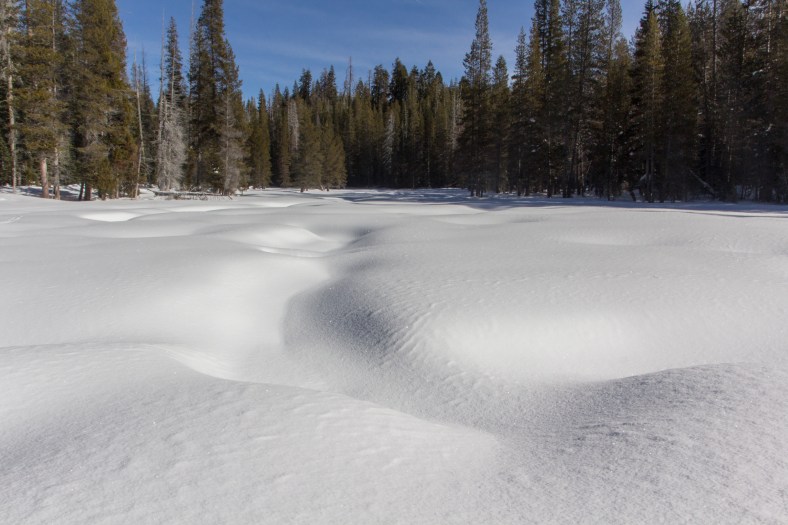
Dewey Meadow

Snow crystals and textures

Wolf lichen
The terrain is not steep and contains only a handful of uphill sections. The first 2 miles run through dense forest, and it eventually thins out about a mile from Dewey Point. It was a bluebird day: blue sky, cloudless, sunny, moderate temperatures; very enjoyable for a stroll in the woods. Once the point is visible the views take your breath away, massive granite rocks near and far, showing the scars of time on their faces. Walk to the point and you can see Yosemite Valley 3000′ below.


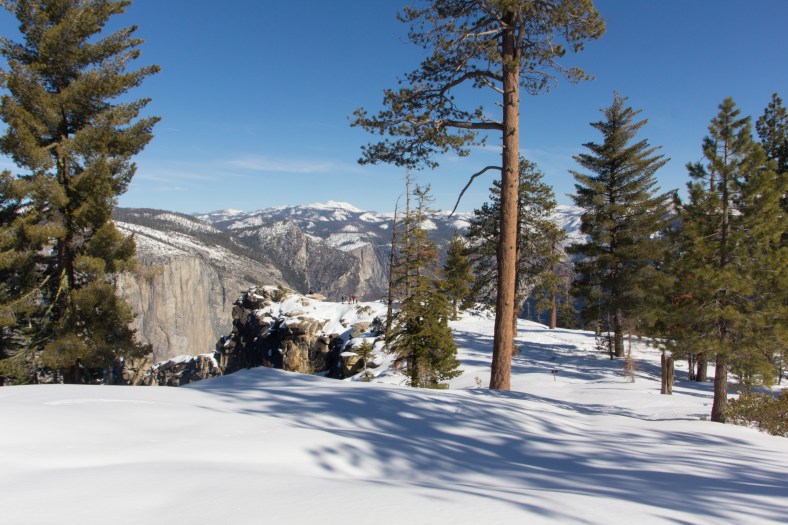
Dewey Point
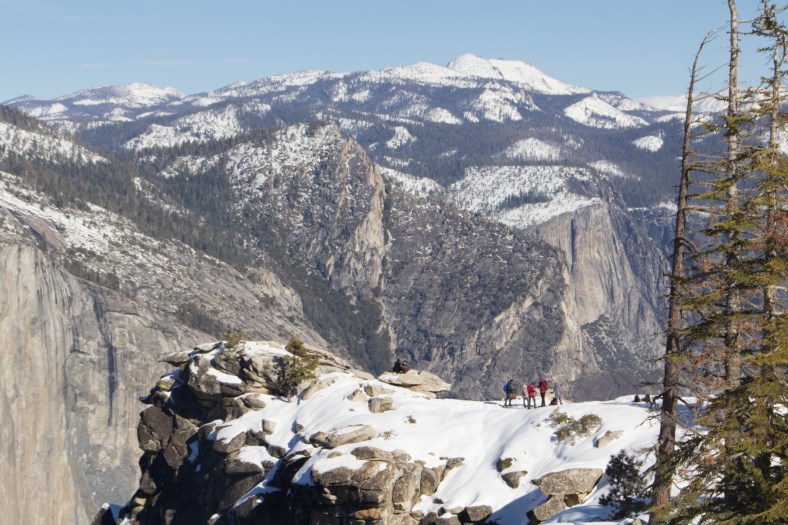
View across Yosemite Valley
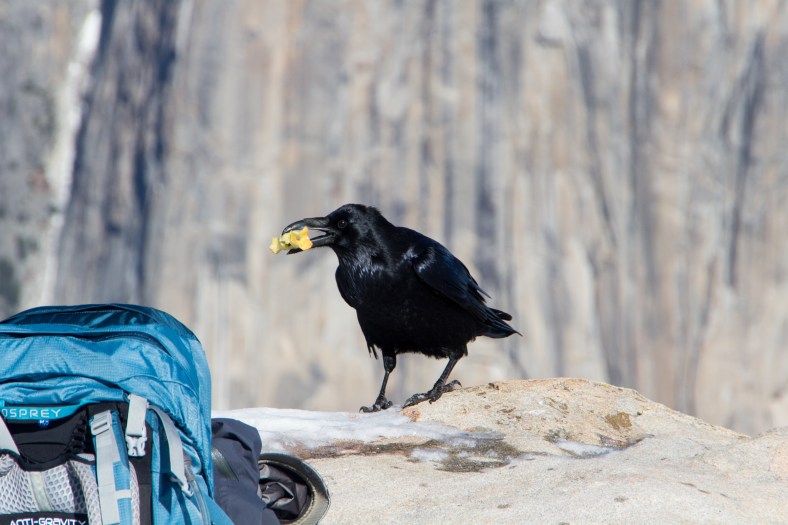
Raven stealing an apple core
We spend some time at the point taking in the view, snacking, and posing for photographs. It wasn’t crowded yet. One time when I was here, there were about 50 people camping in the area. And I’ve heard stories of 250 people camping over a holiday weekend. Today, fortunately, we had most of the area to ourselves. After a while we moved away from the point along the cliff edge looking for a place to set up our tents. Some people prefer the shelter of trees, and some people like open spaces. Fortunately, there’s a bit for everyone here.
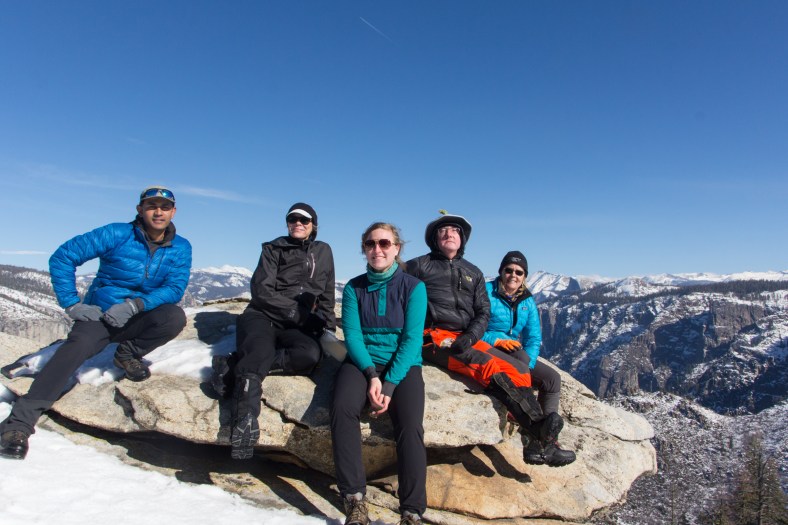
All smiles under the sun
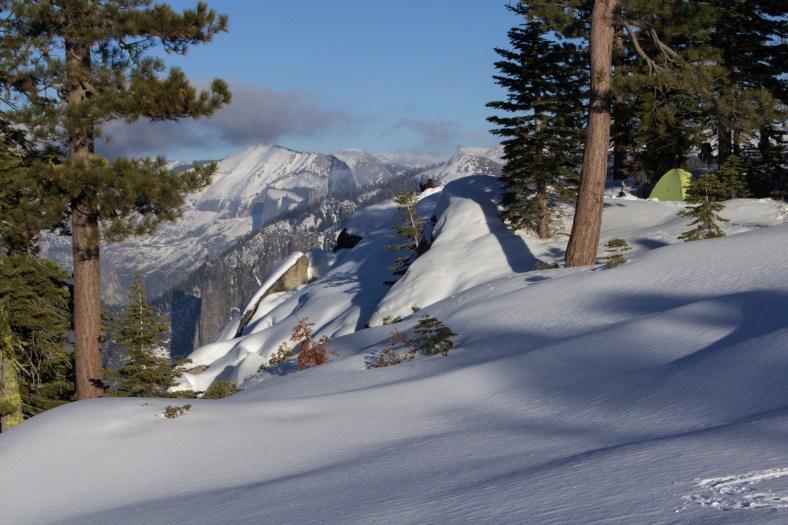
Camping with a million dollar view
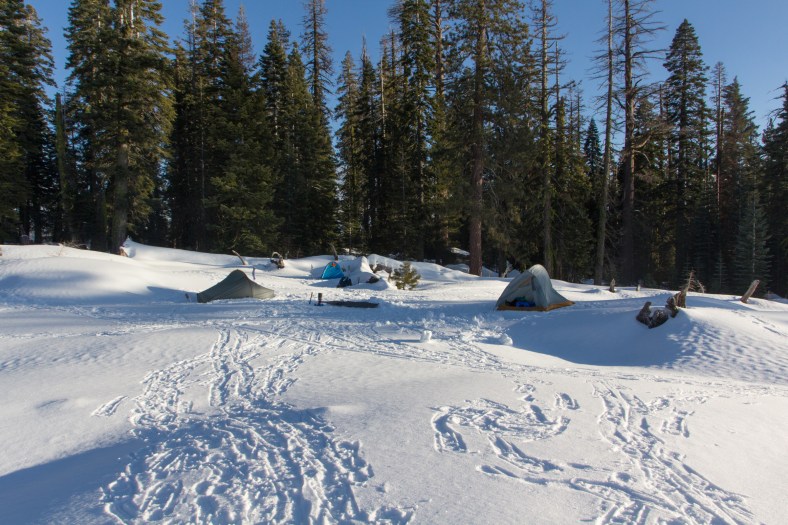
Camp
Around mid-afternoon, the weather began to turn. Dark ominous clouds began to obscure the summits of the tallest peaks, and the temperature would drop. Then, the wind would blow the clouds away and the sun would shine again. Rinse and repeat for a few hours. Quite magical!

The high peaks obscured by the clouds rolling in
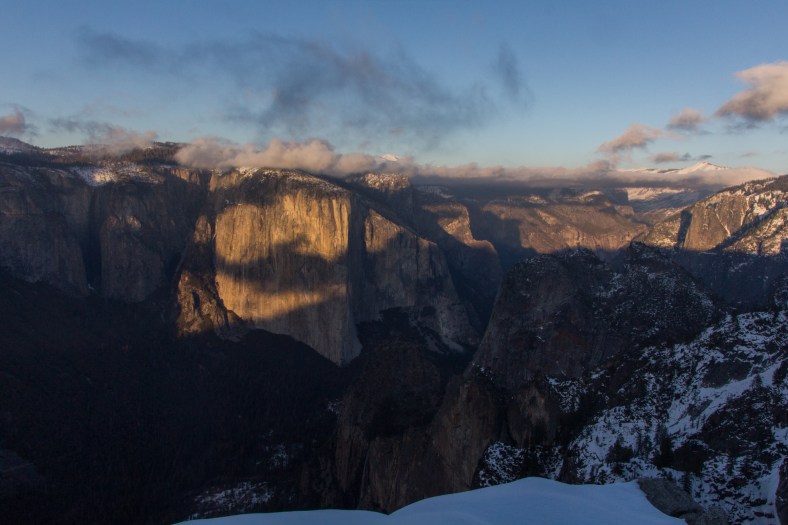
El Capitan
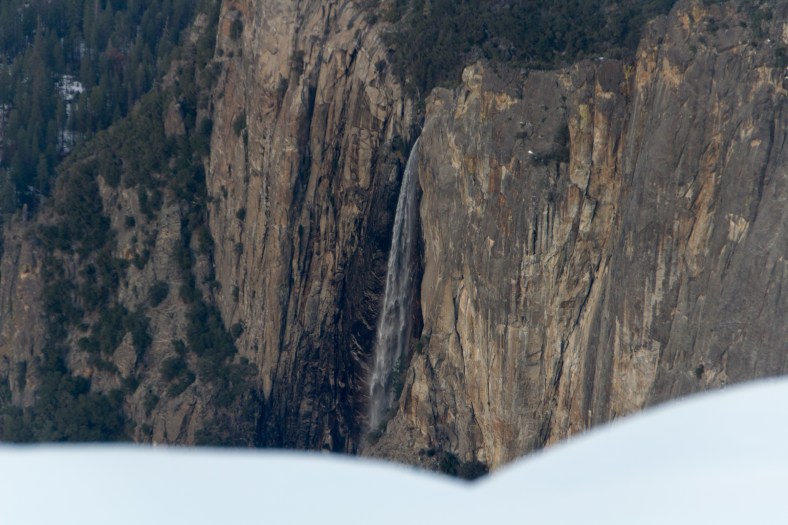
Ribbon Fall
The sun sets early this time of the year, and once it’s below the horizon, the temperature plummets quickly. Dinner is usually at an early time, and then it’s time to rest and several hours of laying in your tent. Bring a book or music to pass the time away, unless you can sleep 10-12 hours straight.
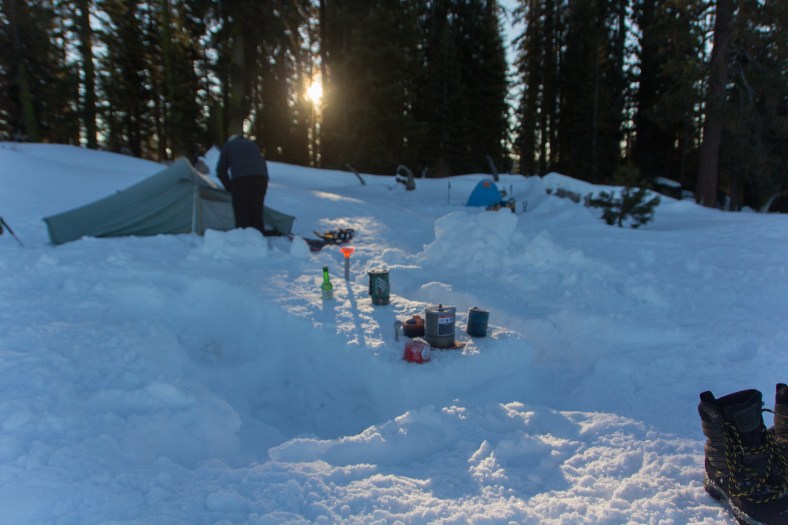
Camp kitchen
The temperatures dropped below 0°F during the night. My boots, which were wet from the hike in, froze over night, and I had a fun time trying to put them on the next morning. We prepared and ate breakfast, organized and packed our gear, took some more photos and then headed back to the cars. We returned via the #14 trail along the Ridge.

Camp with a view of the Yosemite High Country

Walking amongst giants
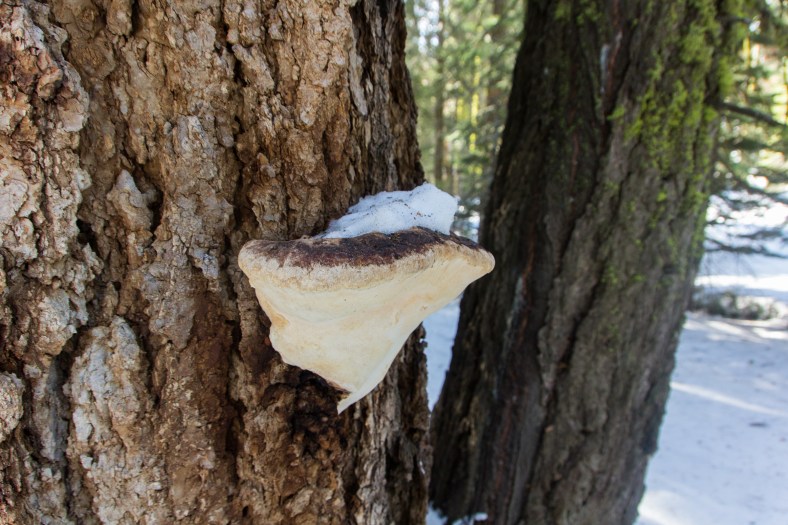
Fungus
From the high point on the #14 trail, you can spot Horse Ridge, 7 miles away as the crow flies. This ridge is south of Ostrander Lake. To the west, you can see the Sierra foothills, across the Central Valley, and the Diablo Range 100 miles away.
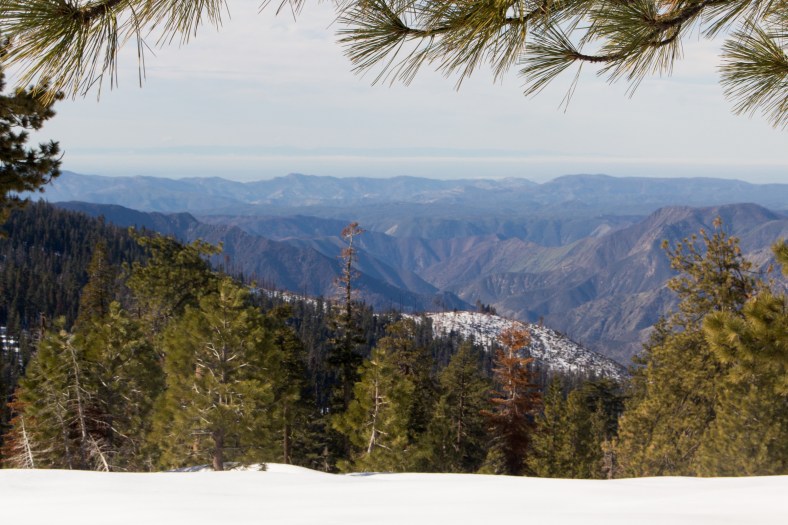
View across the Central Valley to the Diablo Range
On my first overnight backpacking trip to the Sierra, in addition to essential gear, I packed: a full-size towel, a bar of soap, a large tube of toothpaste, a set of clothes to sleep in, a 2nd set of clothes for the hike out, a roll of toilet paper, and an excessive amount of food. It seems crazy now, but back then I didn’t have much experience, and I didn’t know any better. Things have changed since that first trip 7 years ago. I now try to travel light, knowing that I can handle a bit of discomfort, knowing how much food to pack without returning with half of it home, and bringing only essential gear. Simple, effective, and efficient.

My tent and gear
 pacorios