Manuel Antonio National Park is one of the jewels of Costa Rica. It has beautiful white sand beaches and forests with amazing flora and fauna. It is south of the city of Quepos, Puntarenas, and about 80 miles from the nation’s capital of San Jose.
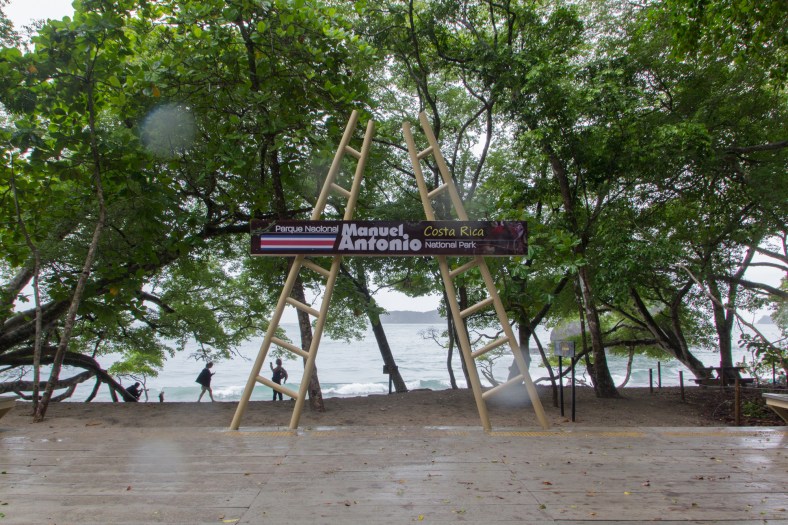
Welcome sign
The hiking trails are well maintained and clearly marked. They meander through luscious green jungle to great vista points and to the beaches. During my visit, the sky was overcast and it was raining. It is quite an experience to feel warm water falling from the sky. In the Sierra Nevada, when it rains, it usually is freezing water droplets which the clouds drop on you. But here, the water felt like 85° F. When the rain would stop, it would turn to steam from the heat in the dense forest.
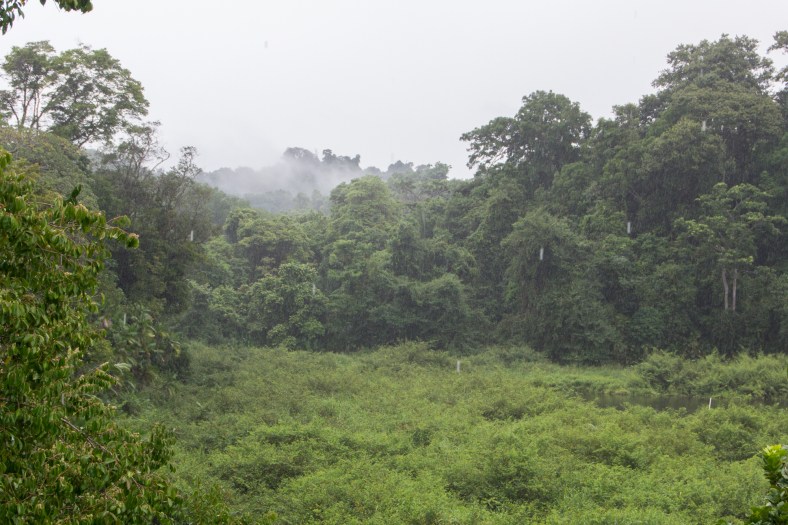
Mist rising from the forest
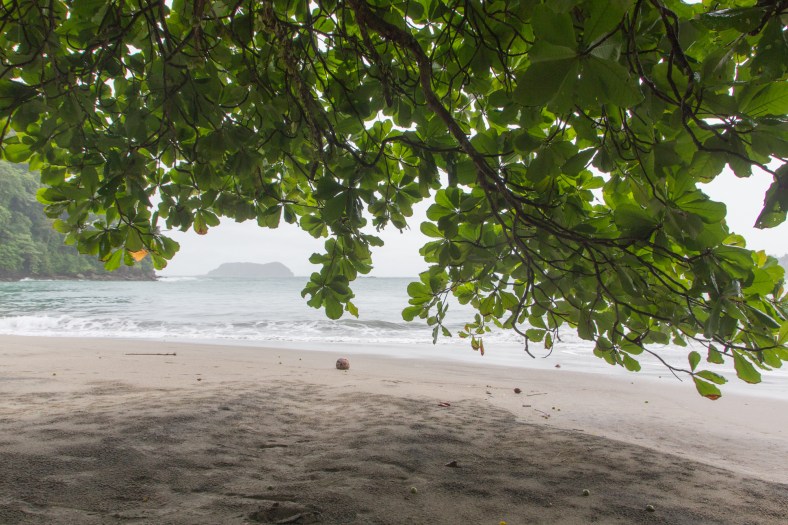
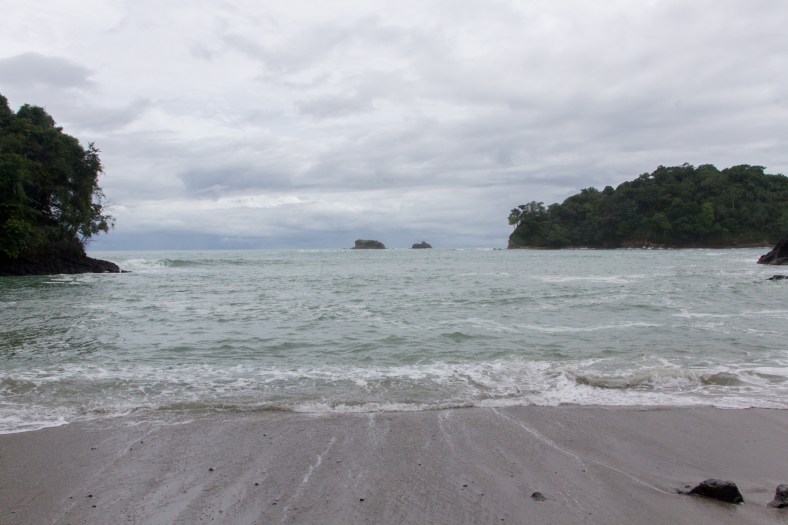
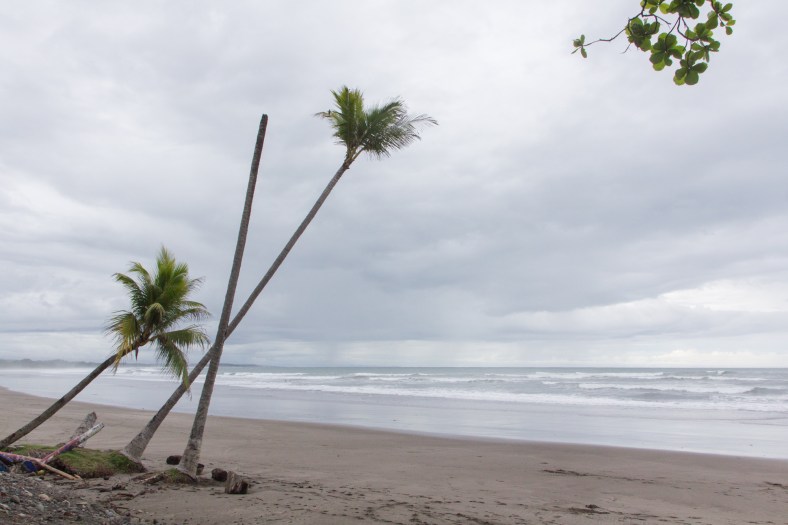
One of the many beaches in the park
Along the trails, some of the the most common creatures you’ll encounter are iguanas and land crabs. The iguanas don’t shy away from people, and they can be seen sunning on dead logs, tree branches, or the beach. When I spent time with my paternal grandparents in Mexico, in the evenings we used to round up the cows at the potrero and take them to the river to water. Along the way, my grandfather was always on the lookout for iguanas on the trees. When he spotted one, he would take his .22 rifle and shoot them, then slit their throat to collect the blood and drink it. The meat would be cooked later over an open fire for dinner.

Spinytail Iguana (Ctenosaura)

Spinytail Iguana (Ctenosaura)
Land crabs are abundant in this park. Their scientific name is Gecarcinus lateralis, but are known by various names including Halloween crab, harlequin crab, and moon crab. You’ll also find anole lizards scurrying around on the ground.
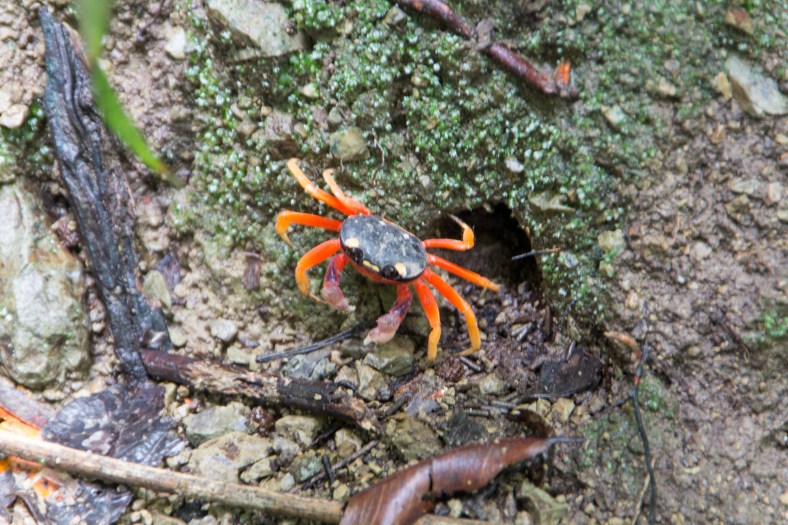
Land Crab, aka Halloween Crab
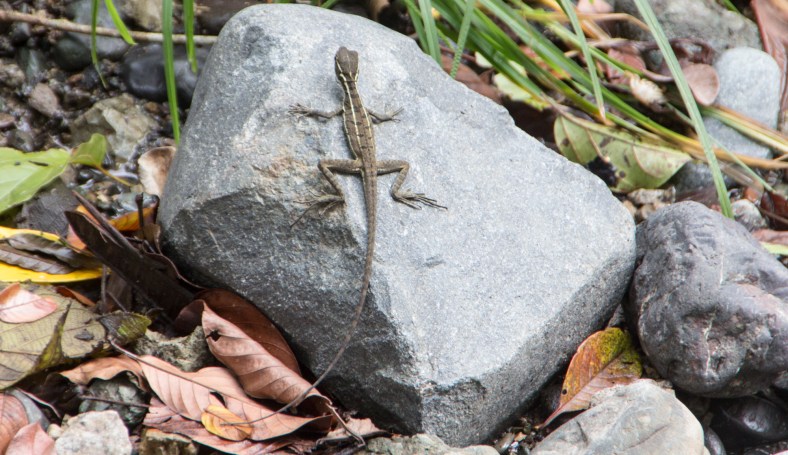
Anole Lizard
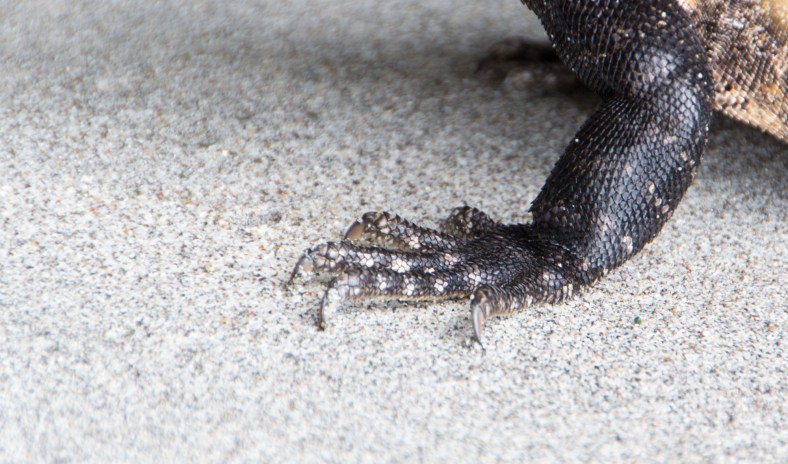
Spinytail Iguana (Ctenosaura)
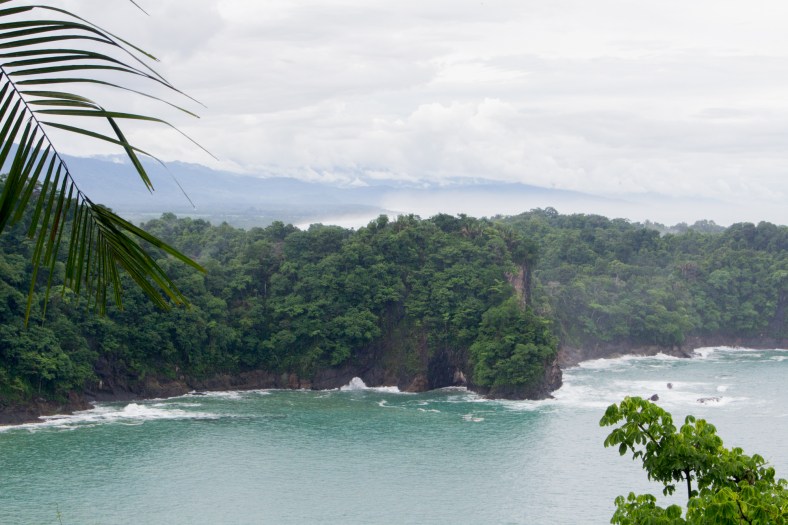
I hiked to Punta Catedral which is a point located at the west end of the park. It is separated from the rest of the park by a land bridge. The views from the trail are of other beaches and of open ocean.


I was impressed by the quantity of plants I observed growing on trees. I learned that these kinds of plants are called epiphytes. They grow on other plants, but they are not considered parasitic. They obtain their nutrients from the water, soil, and debris which accumulates around the plant. Some examples include ferns, bromeliads, air plants, and orchids.
Mushrooms are divided into categories:
- saprophytes – grow on dead organic matter (fallen leaves, roots dead wood) from which they extract carbon dioxide and minerals
- parasites – grow on living trees and plants from which they extract their nutrients
- mycorrhiza – grow on tree roots in a symbiotic relationship; they take nutrients from the tree and give back minerals to the tree

Epiphyte
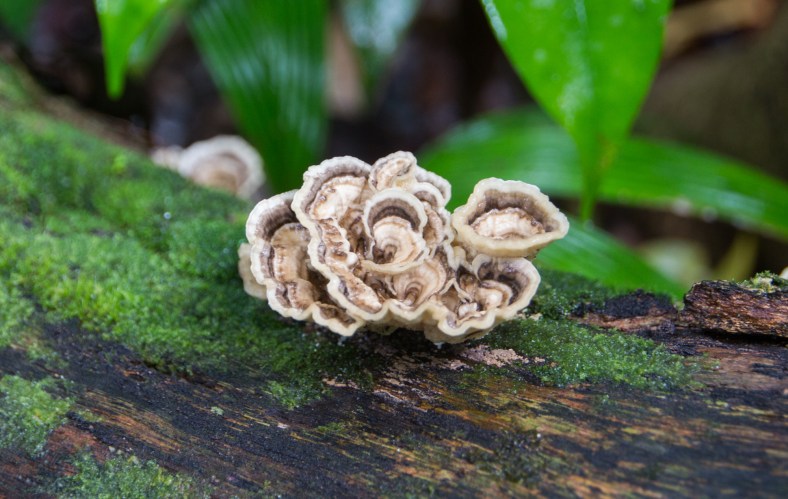
Saprophyte
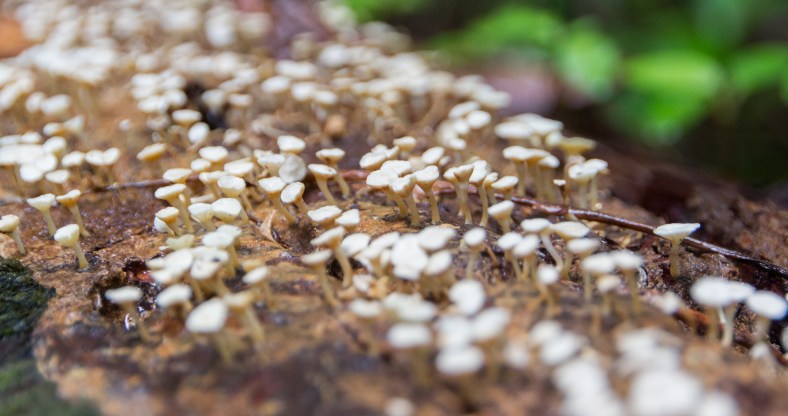
Saprophyte
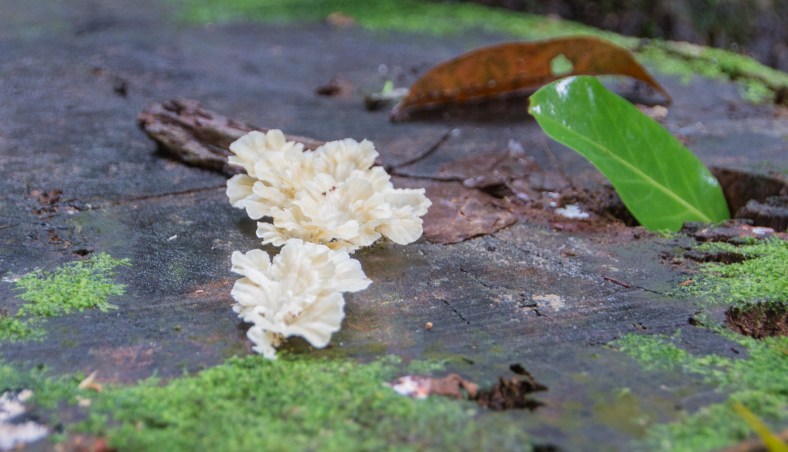
Saprophyte

Saprophyte
Looking up towards the canopy forest you’ll find other creatures such as sloths and monkeys. The sloths are difficult to spot because they make little noise and move very slowly. But now and then you’ll notice a dark colored creature on a tree branch. There are 2 species of sloths in Costa Rica: the brown-throated three-toed sloth, and Hoffmann’s two-toed sloth.

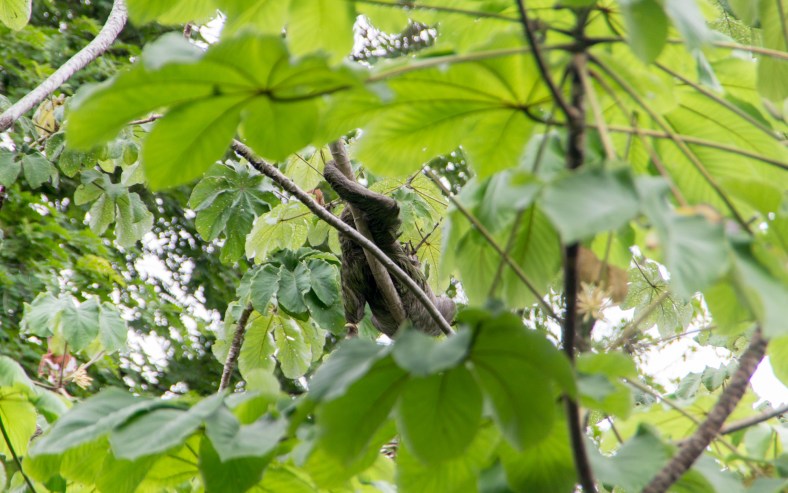
Sloth
In contrast to sloths, monkeys will let you know they’re in the vicinity with their cacophony of sounds. They travel in troops through the forest canopy. They are omnivores and feed on fruits, leaves, flowers, insects, and birds. It is quite entertaining to watch them swinging through the trees.

Capuchin Monkey (Cebinea)
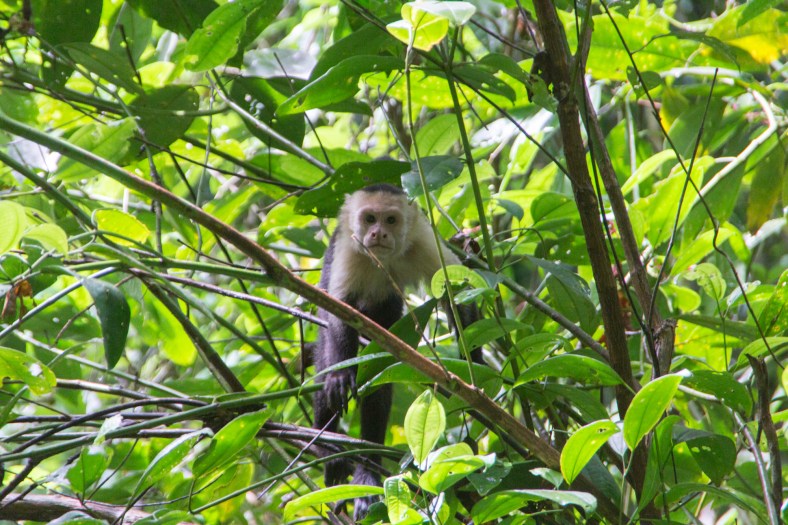
Capuchin Monkey (Cebinea)

Capuchin Monkey (Cebinea)
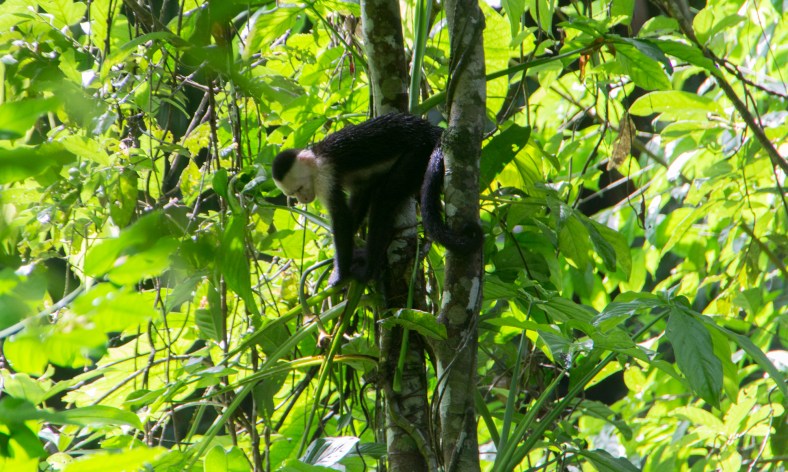
Capuchin Monkey (Cebinea)
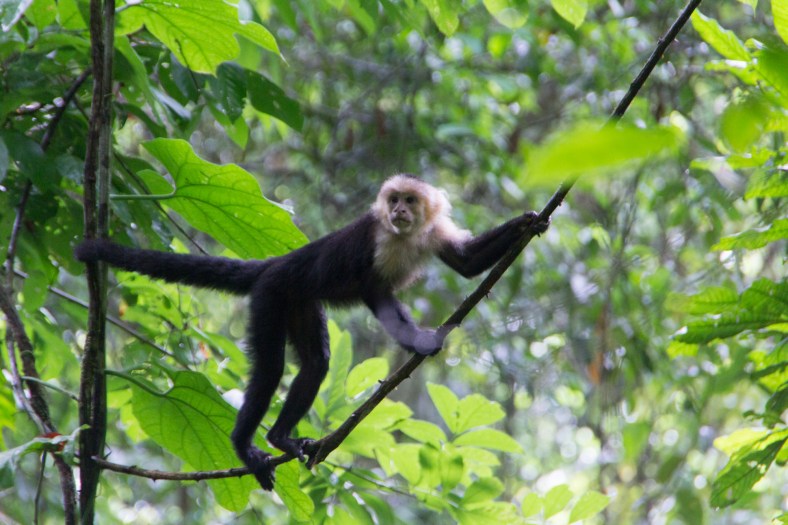
Capuchin Monkey (Cebinea)
Along the highway to Manuel Antonio National Park you will notice myriad palm tree farms. Costa Rica’s economy along the Central Pacific Coast is mainly based on the production of palm oil. These farms started popping up when the United Fruit Company (Chiquita) introduced the African palm to the area as a response to the Panama banana plight in the 1940s. These palms live up to 200 years, but eventually became too tall and difficult to harvest.
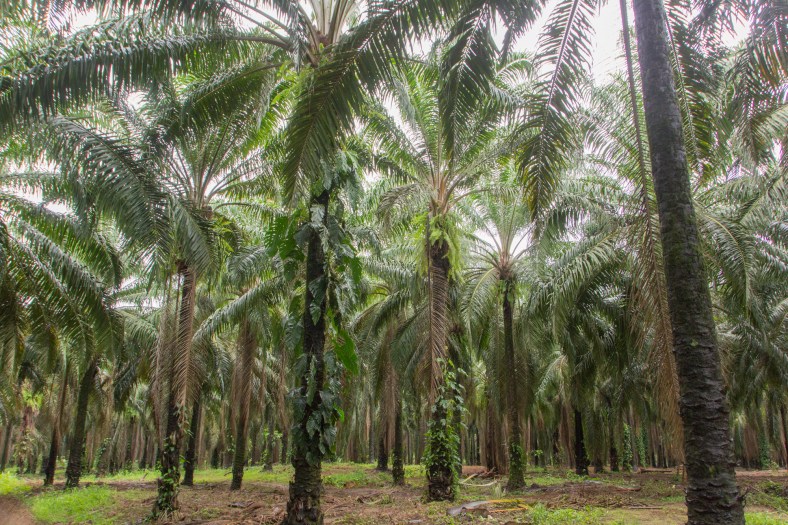
Palm tree farm
 pacorios