Pear Lake is an alpine lake in Sequoia National Park. It sits at about 9500′ elevation and is surrounded by granite ridges and the prominent Alta Peak (11,204′). Visiting in winter is a unique experience. There are no crowds to contend with, no permits to be reserved, and except for a few other skiers, climbers, or winter-loving backpackers, one can easily find solitude near the frozen lake.
It had been a dry winter so far, and trip reports showed minimal snow on the ground. We decided not to carry skis or snowshoes, and brought only ice axe and crampons in case we climbed Alta Peak. The first few miles through the forest were devoid of snow all the way up to ridge above Heather Lake. From here, snow was visible in the forest below and on the high slopes across the canyon.
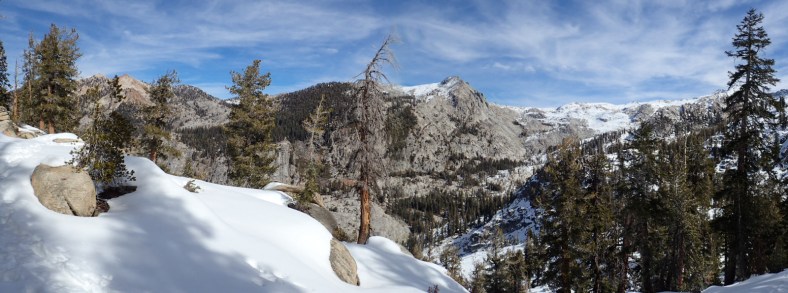
View from the Hump
It was noon as we descended towards Heather Lake, but still relatively cold, and the snow was hard-packed under the trees. All was good until the last 1/2 mile before reaching Pear Lake. At this point, the snow was now softer and several feet deep. I post-holed my way uphill, sometimes sinking in up to my waist in fresh powder, snowflakes reflecting the mid-day sunlight. I expended just as much energy in this last 1/2 mile as I expended over the last 5 or so miles. My quads were burning, snow was melting under my clothes, my head was steaming from the effort, and my fingers were cold and a bit numb – I was too lazy to dig through my pack for my gloves. Nonetheless, I felt alive.
A couple of times I wondered how much easier it would be if I had brought my snowshoes, but there was nothing I could do about it now. Water under the bridge. Just keep moving, get to the lake and relax before setting up camp for the night.
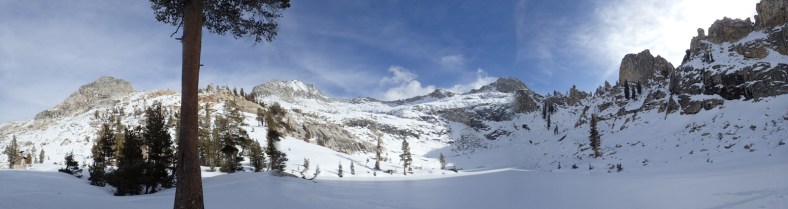
Pear Lake
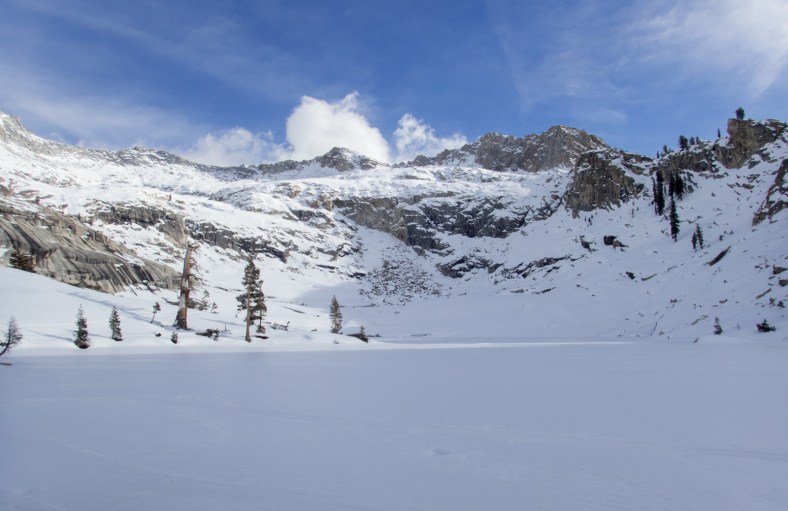
Frozen Pear Lake
This was expected to be a dry weekend with sub-freezing temperatures at night. I didn’t bring a tent, just a pad for insulation, and a sleeping bag. I found a tree for wind protection and made my home for the night. After some exploring around the lake, melting snow for drinking water, and eating dinner, we settled in to watch the colorful sunset.
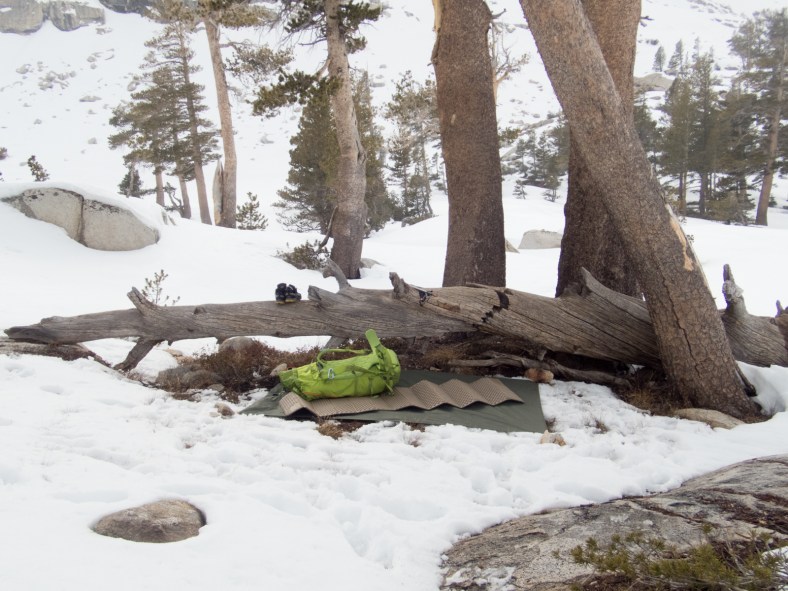
Cowboy camping
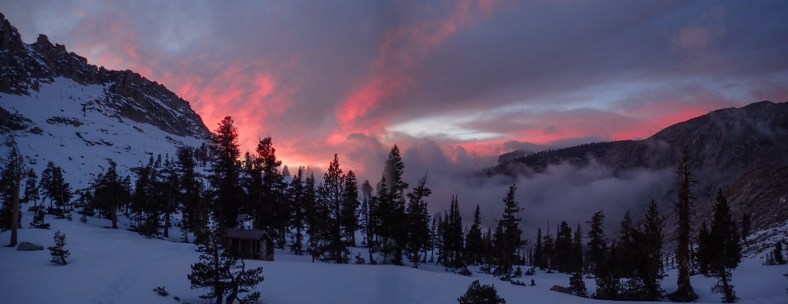
Sunset at Pear Lake
The next morning, no one had the energy or desire to get up early and make a bid for Alta Peak. We took our time getting up, fixing breakfast, drying our gear, taking photos, and practicing the use of crampons on the nearby frozen-over slopes.
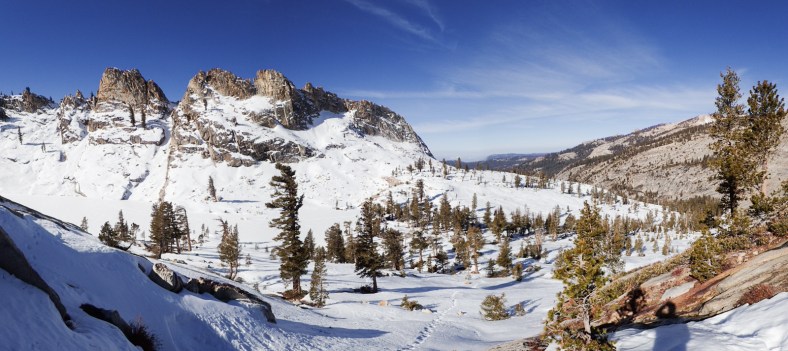
Pear Lake
On the way out, the snow was still solid, so we did not sink in as much as on the previous afternoon, and it was easier to walk. We stopped at Emerald Lake for a break and to walk unto the lake. It is an incredible feeling being in the middle of the lake surrounded on 3 sides by peaks rising 1000′ above the lake.
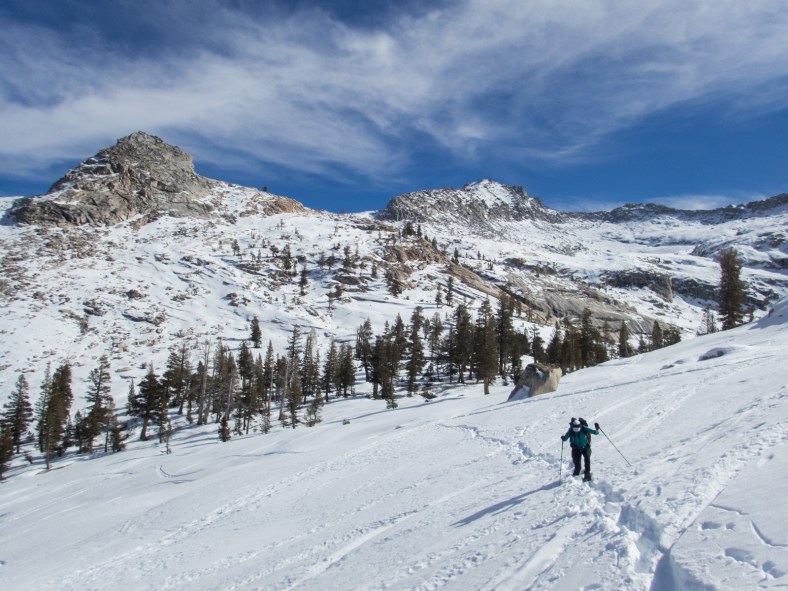
Bonnie postholing out of Pear Lake
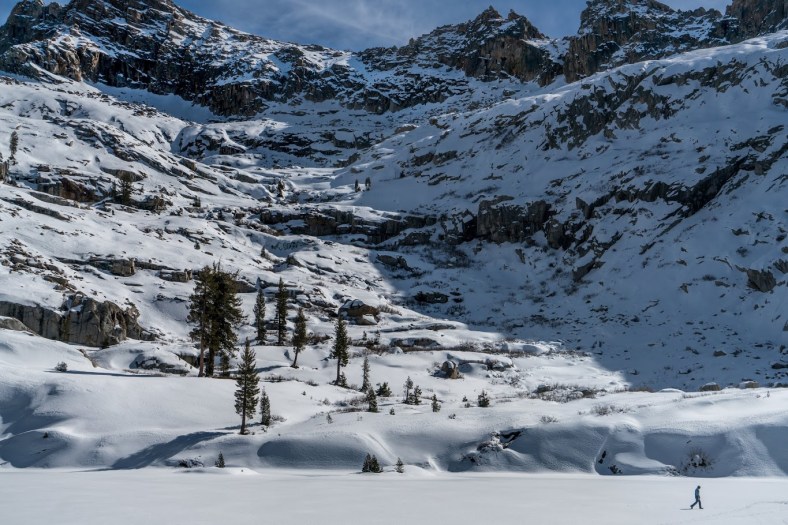
Walking across Emerald Lake (photo by Giovanni)
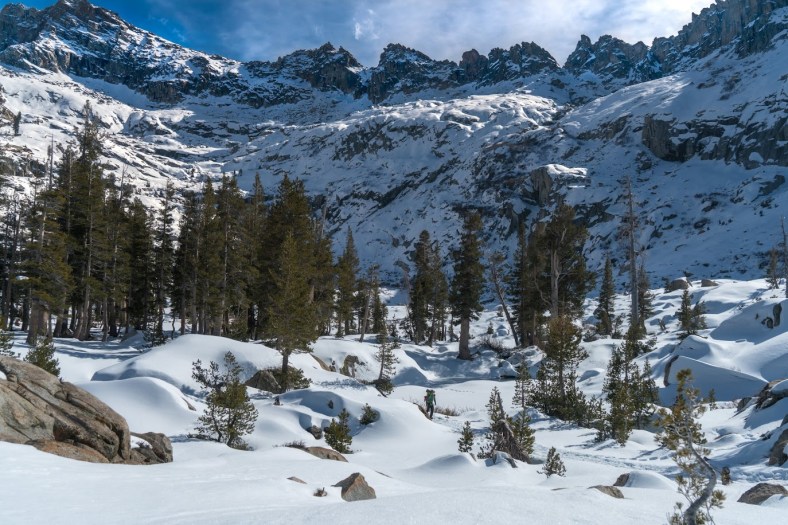
Granite ridges surrounding Emerald Lake (photo by Giovanni)
The Sierra has a lot to offer the adventurous explorer. Snow-capped mountains barren of vegetation can be exciting to climb or simply admire, but I also find interest in living organisms such as mushrooms and lichen which grow on the forest trees whether alive or fallen. After death, trees continue to be fruitful. They provide habitats for wildlife and return nutrients to the soil for other organisms to grow as they decompose.
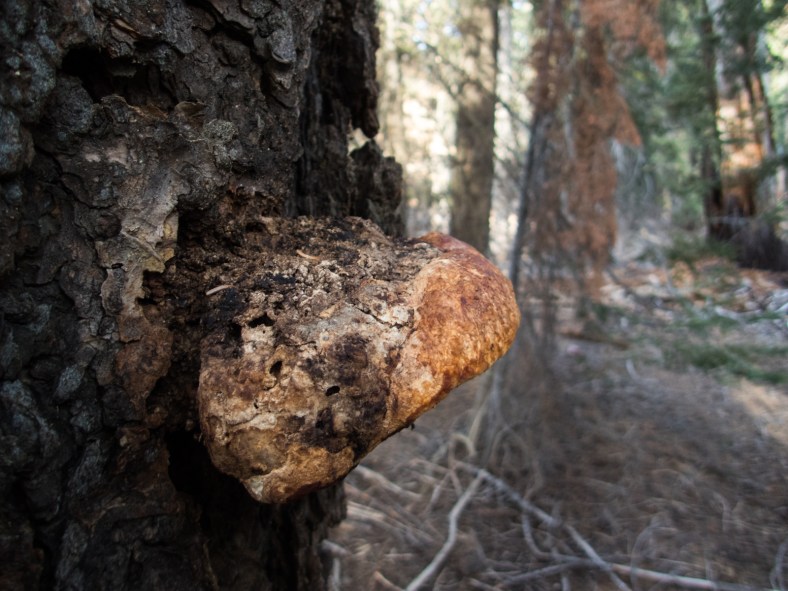
Red Belted Conk (Fomitopsis pinicola)
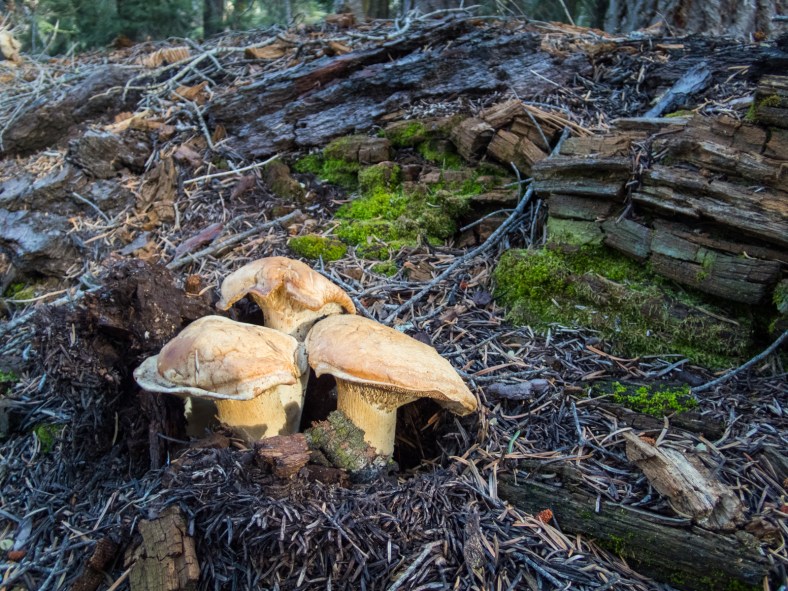
 pacorios